-The Managment-
Monday, March 22, 2010
ManaSHIFT
Team DOTS has officially moved to its new home at ManaSHIFT.com. Thanks to all of you who have been reading our work here. We hope you will continue to follow us at our new location.

Friday, March 19, 2010
The Big Move
In the near future Team DOTS will be moving to a new home at ManaSHIFT.com. Check back here for further developments.
-The Management-
Friday, March 12, 2010
Competitive Approach: Boss Naya (Part 4)
Competitively, as I mentioned earlier, the best way to start with a deck is to net-deck it. Decks with proven track records are generally much better than home-brew builds, much the same way that the Crystal Meth you bought on the corner is much better than the prescription drug cocktail you made in your basement. However, this does not mean that you can't tune the deck that you've netted.
Even when just looking at a deck list, I find it easy to question another player's choices. The first (and easiest) place to attack is the sideboard. Players often have different opinions as to which cards are good in certain match-ups, and sometimes they may be able to eliminate certain cards from the board immediately, knowing that the match-ups those cards would be brought in for are not in their meta-game.
The maindeck is a little trickier. I often try to make changes to the maindeck just by looking at the list and theorizing or by trying to make educated determinations based on gold-fishing (which is when a player plays a deck against no one just drawing and seeing what comes up). This is a mistake. Only after becoming familiar with the deck is it advisable to make changes to it. Otherwise you risk eliminating cards that may serve a subtle purpose (perhaps in a particular match up) or removing interactions that are positive within the deck before realizing what they are.
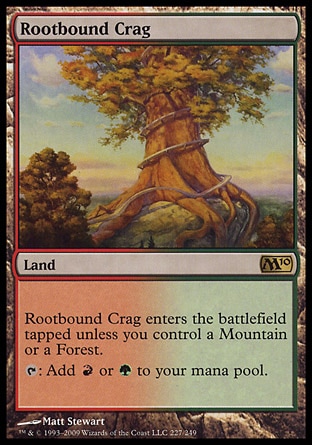
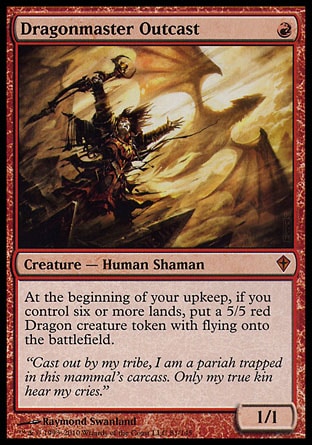
When I first started playing Boss Naya I immediately made two changes to it, swapping out the one-of Rootbound Crag for the new man-land Raging Ravine, giving me a new total of 4 man-lands and 7 come-into-play-tapped (CIPT) lands, which can dramatically slow down the deck. I also swapped out Scute Mob for the newer Dragonmaster Outcast thinking that having a board full of dragons would be better than one singularly large creature.
Having played with the deck, I've found that 7 CIPT lands can indeed create slow starts, but most of the time it is not that big an issue. The deck's best spells are four-drops anyway, so you have some time to play tapped lands without hurting your mana curve (which, sorry to say dear reader, is waaay too complicated a concept for me to go into right now if you are entirely unfamiliar with it or the game).
The Outcast, on the other hand, I didn't find to be quite as good as I initially thought. In certain match ups she was stellar, and she could destroy a stalemated board like no one's business. But if anyone ever played a Baneslayer, she was next to useless. Furthermore, she is slower than Scute Mob, both because she requires another land to become active and because the dragon token will have summoning sickness and be unable to attack the turn it comes into play. Scute Mob gets to swing for five the turn after it arrives, and equipped with Behemoth Sledge it is probably the singularly most terrifying creature ever.
So Ragging Ravine stuck, while Outcast has been ousted (for now at least). The other changes I made to the deck were after reading some articles by LSV himself. I added 2 Baneslayers to the maindeck and moved Tectonic Edge to the sideboard, replacing it with Sunpetal Grove to create better mana fixing. The deck's mana base can be fragile, and a colorless land is sometimes a setback. I took out 2 Birds of Paradise to fit in the Baneslayers, and man can I say that's improved my top-decking. I haven't tested this deck enough to be sure, but I'm fairly certain Baneslayer will be here to stay. She's just ridiculously powerful.
Anyway, the deck list I'm running now is posted below for your perusal:
Main Deck
Lands (24):
4 Arid Mesa
5 Forest
3 Misty Rainforest
2 Mountain
2 Plains
2 Raging Ravine
1 Sejiri Steppe
2 Stirring Wildwood
1 Sunpetal Grove
2 Terramorphic Expanse
Creatures (25):
2 Baneslayer Angel
4 Bloodbraid Elf
4 Knight of the Reliquary
4 Noble Hierarch
4 Ranger of Eos
1 Scute Mob
2 Stoneforge Mystic
4 Wild Nacatl
Spells (11):
2 Ajani Vengeant
1 Basilisk Collar
1 Behemoth Sledge
1 Elspeth, Knight-Errant
3 Lightning Bolt
2 Oblivion Ring
1 Path to Exile
Sideboard (15):
1 Baneslayer Angel
1 Basilisk Collar
1 Behemoth Sledge
4 Cunning Sparkmage
2 Dauntless Escort
2 Qasali Pridemage
2 Manabarbs
1 Oblivion Ring
1 Tectonic Edge
I hope the opening of this new column has given you some insight or at least been fun to read. I'm excited to test Boss Naya's mettle at a major event, but I don't know of any upcoming. However, stay tuned here, and I'm sure there will be other reports, deck breakdowns, and the likes to come. Thanks for reading.
Check us out at: sites.google.com/site/teamdamageonthestack
Even when just looking at a deck list, I find it easy to question another player's choices. The first (and easiest) place to attack is the sideboard. Players often have different opinions as to which cards are good in certain match-ups, and sometimes they may be able to eliminate certain cards from the board immediately, knowing that the match-ups those cards would be brought in for are not in their meta-game.
The maindeck is a little trickier. I often try to make changes to the maindeck just by looking at the list and theorizing or by trying to make educated determinations based on gold-fishing (which is when a player plays a deck against no one just drawing and seeing what comes up). This is a mistake. Only after becoming familiar with the deck is it advisable to make changes to it. Otherwise you risk eliminating cards that may serve a subtle purpose (perhaps in a particular match up) or removing interactions that are positive within the deck before realizing what they are.
When I first started playing Boss Naya I immediately made two changes to it, swapping out the one-of Rootbound Crag for the new man-land Raging Ravine, giving me a new total of 4 man-lands and 7 come-into-play-tapped (CIPT) lands, which can dramatically slow down the deck. I also swapped out Scute Mob for the newer Dragonmaster Outcast thinking that having a board full of dragons would be better than one singularly large creature.
Having played with the deck, I've found that 7 CIPT lands can indeed create slow starts, but most of the time it is not that big an issue. The deck's best spells are four-drops anyway, so you have some time to play tapped lands without hurting your mana curve (which, sorry to say dear reader, is waaay too complicated a concept for me to go into right now if you are entirely unfamiliar with it or the game).
The Outcast, on the other hand, I didn't find to be quite as good as I initially thought. In certain match ups she was stellar, and she could destroy a stalemated board like no one's business. But if anyone ever played a Baneslayer, she was next to useless. Furthermore, she is slower than Scute Mob, both because she requires another land to become active and because the dragon token will have summoning sickness and be unable to attack the turn it comes into play. Scute Mob gets to swing for five the turn after it arrives, and equipped with Behemoth Sledge it is probably the singularly most terrifying creature ever.
So Ragging Ravine stuck, while Outcast has been ousted (for now at least). The other changes I made to the deck were after reading some articles by LSV himself. I added 2 Baneslayers to the maindeck and moved Tectonic Edge to the sideboard, replacing it with Sunpetal Grove to create better mana fixing. The deck's mana base can be fragile, and a colorless land is sometimes a setback. I took out 2 Birds of Paradise to fit in the Baneslayers, and man can I say that's improved my top-decking. I haven't tested this deck enough to be sure, but I'm fairly certain Baneslayer will be here to stay. She's just ridiculously powerful.
Anyway, the deck list I'm running now is posted below for your perusal:
Main Deck
Lands (24):
4 Arid Mesa
5 Forest
3 Misty Rainforest
2 Mountain
2 Plains
2 Raging Ravine
1 Sejiri Steppe
2 Stirring Wildwood
1 Sunpetal Grove
2 Terramorphic Expanse
Creatures (25):
2 Baneslayer Angel
4 Bloodbraid Elf
4 Knight of the Reliquary
4 Noble Hierarch
4 Ranger of Eos
1 Scute Mob
2 Stoneforge Mystic
4 Wild Nacatl
Spells (11):
2 Ajani Vengeant
1 Basilisk Collar
1 Behemoth Sledge
1 Elspeth, Knight-Errant
3 Lightning Bolt
2 Oblivion Ring
1 Path to Exile
Sideboard (15):
1 Baneslayer Angel
1 Basilisk Collar
1 Behemoth Sledge
4 Cunning Sparkmage
2 Dauntless Escort
2 Qasali Pridemage
2 Manabarbs
1 Oblivion Ring
1 Tectonic Edge
I hope the opening of this new column has given you some insight or at least been fun to read. I'm excited to test Boss Naya's mettle at a major event, but I don't know of any upcoming. However, stay tuned here, and I'm sure there will be other reports, deck breakdowns, and the likes to come. Thanks for reading.
Check us out at: sites.google.com/site/teamdamageonthestack
Wednesday, March 10, 2010
Competitive Approach: Boss Naya (Part 3)
For those of you who don't know, a sideboard is an additional 15 cards added to a deck that can be swapped into the “maindeck” on a 1-for-1 basis (i.e. you have to take a card out of the maindeck every time you bring one in from the sideboard). The sideboard, which must be exactly 15 cards, is meant to enhance match-ups by tuning the deck.
What cards are in your sideboard are often determined by the meta-game that you as a player will be facing. If you think that it will be control heavy, then you will use cards that will make your deck better against control. If you think it will be aggro heavy, then you include cards that can shut down aggro. It is somewhat of a personalized matter based on what cards you think are good against the meta-game and based on what cards you want to side out of your deck.
In some cases decks also feature what are called “transformational sideboards” wherein the deck tries to do something entirely different in the second game of the match than it did in the first. This could be changing from an aggro deck to a mid-range or maybe even a combo or control deck. With only 15 cards at your disposal, this is hard to pull off, but some decks will allow you to do it.
Boss Naya is a deck that features a transformational sideboard in all of its incarnations (so far at least), but certain other sideboard options are still being tested and debated.
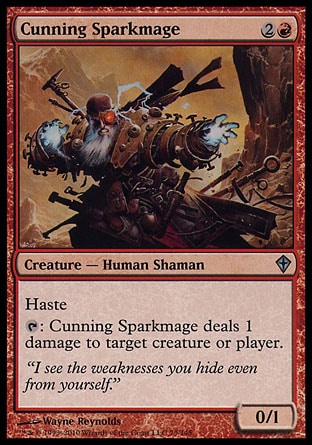
The transformation featured in each sideboard is the inclusion of Cunning Sparkmage, which pairs with Basilisk Collar, a combo that can kill almost every creature in the game. This package is brought in when the deck faces other aggro and creature-based decks (read: Baneslayer), opting for more removal while boarding out the Ranger of Eos and Wild Nacatl toolbox, which is much better against decks that are trying to control the board and not as interested in playing creatures.
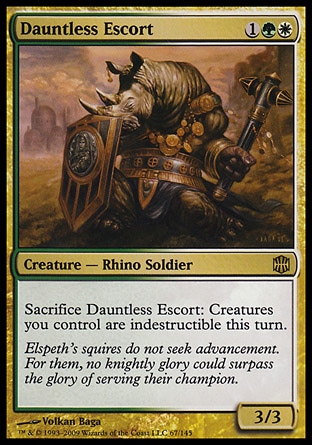
Against control decks putting out continual threats is much more important, so the vaunted equipment packed is replaced by Dauntless Escort, Manabarbs, and whatever other removal hate people think is good. I've seen Great Sable Stag and Summoning Trap boarded for this deck. Just saying.
Jund is a difficult match-up at all times. Generally, the idea is to bring in more Behemoth Sledge and try to play more threats than they can handle with their removal. However, another method is to bring in the Sparkmage combo and try to eliminate their threats, though in this case you would not board out the Ranger of Eos package. I'm not sure which is really better, and I guess as a player you will have to decide (if you choose to play this deck).
Sideboarding is an art that requires a lot of time spent with the deck and is based on the meta-game and specifically who your opponent is (and what you think you can get away with against him). There isn't any one way to go about it, and it often times the correct choices in one meta (like a major tournament) are much different than the correct choices in another (your local card shop's weekly events). What is important, especially when net-decking, is to realize why players made the choices they did before you go trying to change anything.
That doesn't mean that you should be afraid to make changes to a deck or to its sideboard. Decks are living organisms, if you will, and need to be adjusted to fit meta-games or even just so they don't get outdated. But you should be intelligent when going about it and understand what components you are replacing in the deck and why.
Upcoming: Changes I've made and considered making to Boss Naya
Check us out at: sites.google.com/site/teamdamageonthestack
What cards are in your sideboard are often determined by the meta-game that you as a player will be facing. If you think that it will be control heavy, then you will use cards that will make your deck better against control. If you think it will be aggro heavy, then you include cards that can shut down aggro. It is somewhat of a personalized matter based on what cards you think are good against the meta-game and based on what cards you want to side out of your deck.
In some cases decks also feature what are called “transformational sideboards” wherein the deck tries to do something entirely different in the second game of the match than it did in the first. This could be changing from an aggro deck to a mid-range or maybe even a combo or control deck. With only 15 cards at your disposal, this is hard to pull off, but some decks will allow you to do it.
Boss Naya is a deck that features a transformational sideboard in all of its incarnations (so far at least), but certain other sideboard options are still being tested and debated.
The transformation featured in each sideboard is the inclusion of Cunning Sparkmage, which pairs with Basilisk Collar, a combo that can kill almost every creature in the game. This package is brought in when the deck faces other aggro and creature-based decks (read: Baneslayer), opting for more removal while boarding out the Ranger of Eos and Wild Nacatl toolbox, which is much better against decks that are trying to control the board and not as interested in playing creatures.
Against control decks putting out continual threats is much more important, so the vaunted equipment packed is replaced by Dauntless Escort, Manabarbs, and whatever other removal hate people think is good. I've seen Great Sable Stag and Summoning Trap boarded for this deck. Just saying.
Jund is a difficult match-up at all times. Generally, the idea is to bring in more Behemoth Sledge and try to play more threats than they can handle with their removal. However, another method is to bring in the Sparkmage combo and try to eliminate their threats, though in this case you would not board out the Ranger of Eos package. I'm not sure which is really better, and I guess as a player you will have to decide (if you choose to play this deck).
Sideboarding is an art that requires a lot of time spent with the deck and is based on the meta-game and specifically who your opponent is (and what you think you can get away with against him). There isn't any one way to go about it, and it often times the correct choices in one meta (like a major tournament) are much different than the correct choices in another (your local card shop's weekly events). What is important, especially when net-decking, is to realize why players made the choices they did before you go trying to change anything.
That doesn't mean that you should be afraid to make changes to a deck or to its sideboard. Decks are living organisms, if you will, and need to be adjusted to fit meta-games or even just so they don't get outdated. But you should be intelligent when going about it and understand what components you are replacing in the deck and why.
Upcoming: Changes I've made and considered making to Boss Naya
Check us out at: sites.google.com/site/teamdamageonthestack
Monday, March 8, 2010
Competitive Approach: Boss Naya (Part 2)
Those of you out there who are not up-to-date with the current card pool may find this posting to be rather boring. Since it would take me forever to explain what each card does, I've linked to the cards I've named so that all of you who don't know them will have a better understanding. Hopefully that will help, but this post might get a little technical...so I understand (though grudgingly) if you want to pass on this one and wait til next time.
Now, moving on.
The Boss Naya deck is an aggro/mid-range deck capable of dropping early threats and using cards like Noble Hierarch and Birds of Paradise to accelerate into heavier threats. The deck becomes strong when it hits its four-drops like Ranger of Eos, Bloodbraid Elf, and Ajani Vengeant or Elspeth, Knight Errant. Each of these cards is extremely powerful and can quickly turn a game around.
Boss Naya is also a toolbox deck. A toolbox deck is a deck that is reliant on “tutors”, cards that search out specific cards in your deck (or “library” as it's called). Tutors get their name from a series of cards, the most famous of which is Demonic Tutor, a card that allows a player to search out any card in his or her deck. Boss Naya has three tutoring cards: Ranger of Eos, Stoneforge Mystic, and Knight of the Reliquary.
Ranger of Eos allows the pilot to search for his one-drop creatures (creatures that cost one mana to play). Stoneforge Mystic searches for equipment that makes all creatures better. And Knight of the Reliquary searches for lands, and in the Zendikar block there are some lands that have effects when they come into play (or “enter the battlefield” as the new jargon states).
Ranger of Eos and Stoneforge Mystic both make the deck extremely resilient, putting more creatures into your hand and putting equipment onto the field that makes every creature (even your lowly accelerants) a threat. Knight of the Reliquary gives the deck a slew of combat tricks that can quickly turn the tide of battle.
Bloodbraid Elf is also a tutor in its own way, though it doesn't search for anything specific. Its Cascade ability, which has made Jund so powerful, means that you are potentially playing two spells instead of one when you cast it. What better bargain can you get than that?
The reason I think this deck is so good is that it can be extremely fast and overwhelming. But if it isn't, or if the opponent manages to slow it down, it has enough resilience to come back and retake the board. I was playing a game against an opponent last week where I managed to stabilize at 6 life and turn the game around and win, something that most normal aggro decks don't do. The toolbox gives you a continual stream of threats and a lot of versatility, something that not every deck can boast.
I'm posting the list that LSV ran to a 12-1 record below. It is currently the list that I am playing. In the next post I will go over how the sideboard for this deck works. It was actually a mystery to me until recently, so I'm hoping I can explain it well.
Luis Scott-Vargas (USA)
Pro Tour–San Diego Top 8
Main Deck
60 cards
4 Arid Mesa
5 Forest
3 Misty Rainforest
2 Mountain
2 Plains
1 Raging Ravine
1 Rootbound Crag
1 Sejiri Steppe
2 Stirring Wildwood
1 Tectonic Edge
2 Terramorphic Expanse
--------------------------------------------------------------------------------
24 lands
2 Birds of Paradise
4 Bloodbraid Elf
4 Knight of the Reliquary
4 Noble Hierarch
4 Ranger of Eos
1 Scute Mob
2 Stoneforge Mystic
4 Wild Nacatl
--------------------------------------------------------------------------------
25 creatures 2 Ajani Vengeant
1 Basilisk Collar
1 Behemoth Sledge
1 Elspeth, Knight-Errant
3 Lightning Bolt
2 Oblivion Ring
1 Path to Exile
--------------------------------------------------------------------------------
11 other spells
Sideboard
2 Baneslayer Angel
1 Basilisk Collar
1 Behemoth Sledge
4 Cunning Sparkmage
2 Dauntless Escort
1 Goblin Guide
2 Manabarbs
1 Oblivion Ring
1 Stoneforge Mystic
--------------------------------------------------------------------------------
15 sideboard cards
Upcoming: Sideboarding for Boss Naya
Check us out at: sites.google.com/site/teamdamageonthestack
Now, moving on.
The Boss Naya deck is an aggro/mid-range deck capable of dropping early threats and using cards like Noble Hierarch and Birds of Paradise to accelerate into heavier threats. The deck becomes strong when it hits its four-drops like Ranger of Eos, Bloodbraid Elf, and Ajani Vengeant or Elspeth, Knight Errant. Each of these cards is extremely powerful and can quickly turn a game around.
Boss Naya is also a toolbox deck. A toolbox deck is a deck that is reliant on “tutors”, cards that search out specific cards in your deck (or “library” as it's called). Tutors get their name from a series of cards, the most famous of which is Demonic Tutor, a card that allows a player to search out any card in his or her deck. Boss Naya has three tutoring cards: Ranger of Eos, Stoneforge Mystic, and Knight of the Reliquary.
Ranger of Eos allows the pilot to search for his one-drop creatures (creatures that cost one mana to play). Stoneforge Mystic searches for equipment that makes all creatures better. And Knight of the Reliquary searches for lands, and in the Zendikar block there are some lands that have effects when they come into play (or “enter the battlefield” as the new jargon states).
Ranger of Eos and Stoneforge Mystic both make the deck extremely resilient, putting more creatures into your hand and putting equipment onto the field that makes every creature (even your lowly accelerants) a threat. Knight of the Reliquary gives the deck a slew of combat tricks that can quickly turn the tide of battle.
Bloodbraid Elf is also a tutor in its own way, though it doesn't search for anything specific. Its Cascade ability, which has made Jund so powerful, means that you are potentially playing two spells instead of one when you cast it. What better bargain can you get than that?
The reason I think this deck is so good is that it can be extremely fast and overwhelming. But if it isn't, or if the opponent manages to slow it down, it has enough resilience to come back and retake the board. I was playing a game against an opponent last week where I managed to stabilize at 6 life and turn the game around and win, something that most normal aggro decks don't do. The toolbox gives you a continual stream of threats and a lot of versatility, something that not every deck can boast.
I'm posting the list that LSV ran to a 12-1 record below. It is currently the list that I am playing. In the next post I will go over how the sideboard for this deck works. It was actually a mystery to me until recently, so I'm hoping I can explain it well.
Luis Scott-Vargas (USA)
Pro Tour–San Diego Top 8
Main Deck
60 cards
4 Arid Mesa
5 Forest
3 Misty Rainforest
2 Mountain
2 Plains
1 Raging Ravine
1 Rootbound Crag
1 Sejiri Steppe
2 Stirring Wildwood
1 Tectonic Edge
2 Terramorphic Expanse
--------------------------------------------------------------------------------
24 lands
2 Birds of Paradise
4 Bloodbraid Elf
4 Knight of the Reliquary
4 Noble Hierarch
4 Ranger of Eos
1 Scute Mob
2 Stoneforge Mystic
4 Wild Nacatl
--------------------------------------------------------------------------------
25 creatures 2 Ajani Vengeant
1 Basilisk Collar
1 Behemoth Sledge
1 Elspeth, Knight-Errant
3 Lightning Bolt
2 Oblivion Ring
1 Path to Exile
--------------------------------------------------------------------------------
11 other spells
Sideboard
2 Baneslayer Angel
1 Basilisk Collar
1 Behemoth Sledge
4 Cunning Sparkmage
2 Dauntless Escort
1 Goblin Guide
2 Manabarbs
1 Oblivion Ring
1 Stoneforge Mystic
--------------------------------------------------------------------------------
15 sideboard cards
Upcoming: Sideboarding for Boss Naya
Check us out at: sites.google.com/site/teamdamageonthestack
Sunday, March 7, 2010
Competitive Approach: Boss Naya (Part 1)
Ladies and gents, today marks an exciting time for the DOTS blog...it's the start of a new column! Competitive Approach will be a column I work at in order to break down some competitive constructed Magic in order to show all of you the ways that I approach building a deck, preparing for tournaments, etc. I hope that this could help you in any attempts you make at competitive play, or at the very least give you some fun insight into that aspect of the game.
Anyway, the first step towards playing any constructed format is to choose a deck. I know I ranted and raved about the evils of it in my Casual Magic series, but when playing competitively the first thing that I do is net-deck. For those of you who have forgotten, “net-decking” is when you look up decks other players have played successfully using the vast, omnipotent powers of the Internet.
For casual Magic I would say net-decking ruins the spirit of things, but for competitive Magic (unless you're some big innovative mind) I think it's a lot better to play a deck that has a successful track record. Every player wants to create a new deck that garners attention and influences changes in the meta-game, but most of the time that's not how it works out. Competitive constructed play is about who is the better player (or pilot, as we call them), not who is more creative, and it is easier to get your name out there by winning tournaments rather than creating new decks.
From following my event coverage you probably know that I've tried out a couple of decks this season: white weenie, Jund, Bant, and Knightfall. Knightfall (or Junk) was definitely the most effective deck for me, and I may yet return to it, but a new breakout list has caught my attention, and I must tell you it is fun as hell to play.
“Boss Naya” derives its name from its creator and the colors it uses. Tom “the Boss” Ross was the man who created the deck, and Louis-Scott Vargas piloted a version of it to a 10-0 record at Pro Tour San Diego.
“Naya” is a name that came from the Shards of Alara block for Magic (much the same as Jund or Bant). In Shards of Alara there were five shards, each of which featured three colors. Naya features green, white and red. Now not every card in the deck is from Shards of Alara, but the names of the shards have come to represent any deck that use its three respective colors.
Anyway, after having watched people play this deck at the last 5K in Edison, and reading about it online, I decided to give it a whirl. Tune in next time as I give a breakdown of the deck and why I think it is so good.
Upcoming: a dissection of “Boss Naya”
Check us out at: sites.google.com/site/teamdamageonthestack
Anyway, the first step towards playing any constructed format is to choose a deck. I know I ranted and raved about the evils of it in my Casual Magic series, but when playing competitively the first thing that I do is net-deck. For those of you who have forgotten, “net-decking” is when you look up decks other players have played successfully using the vast, omnipotent powers of the Internet.
For casual Magic I would say net-decking ruins the spirit of things, but for competitive Magic (unless you're some big innovative mind) I think it's a lot better to play a deck that has a successful track record. Every player wants to create a new deck that garners attention and influences changes in the meta-game, but most of the time that's not how it works out. Competitive constructed play is about who is the better player (or pilot, as we call them), not who is more creative, and it is easier to get your name out there by winning tournaments rather than creating new decks.
From following my event coverage you probably know that I've tried out a couple of decks this season: white weenie, Jund, Bant, and Knightfall. Knightfall (or Junk) was definitely the most effective deck for me, and I may yet return to it, but a new breakout list has caught my attention, and I must tell you it is fun as hell to play.
“Boss Naya” derives its name from its creator and the colors it uses. Tom “the Boss” Ross was the man who created the deck, and Louis-Scott Vargas piloted a version of it to a 10-0 record at Pro Tour San Diego.
“Naya” is a name that came from the Shards of Alara block for Magic (much the same as Jund or Bant). In Shards of Alara there were five shards, each of which featured three colors. Naya features green, white and red. Now not every card in the deck is from Shards of Alara, but the names of the shards have come to represent any deck that use its three respective colors.
Anyway, after having watched people play this deck at the last 5K in Edison, and reading about it online, I decided to give it a whirl. Tune in next time as I give a breakdown of the deck and why I think it is so good.
Upcoming: a dissection of “Boss Naya”
Check us out at: sites.google.com/site/teamdamageonthestack
Subscribe to:
Posts (Atom)