-The Managment-
Monday, March 22, 2010
ManaSHIFT
Team DOTS has officially moved to its new home at ManaSHIFT.com. Thanks to all of you who have been reading our work here. We hope you will continue to follow us at our new location.

Friday, March 19, 2010
The Big Move
In the near future Team DOTS will be moving to a new home at ManaSHIFT.com. Check back here for further developments.
-The Management-
Friday, March 12, 2010
Competitive Approach: Boss Naya (Part 4)
Competitively, as I mentioned earlier, the best way to start with a deck is to net-deck it. Decks with proven track records are generally much better than home-brew builds, much the same way that the Crystal Meth you bought on the corner is much better than the prescription drug cocktail you made in your basement. However, this does not mean that you can't tune the deck that you've netted.
Even when just looking at a deck list, I find it easy to question another player's choices. The first (and easiest) place to attack is the sideboard. Players often have different opinions as to which cards are good in certain match-ups, and sometimes they may be able to eliminate certain cards from the board immediately, knowing that the match-ups those cards would be brought in for are not in their meta-game.
The maindeck is a little trickier. I often try to make changes to the maindeck just by looking at the list and theorizing or by trying to make educated determinations based on gold-fishing (which is when a player plays a deck against no one just drawing and seeing what comes up). This is a mistake. Only after becoming familiar with the deck is it advisable to make changes to it. Otherwise you risk eliminating cards that may serve a subtle purpose (perhaps in a particular match up) or removing interactions that are positive within the deck before realizing what they are.
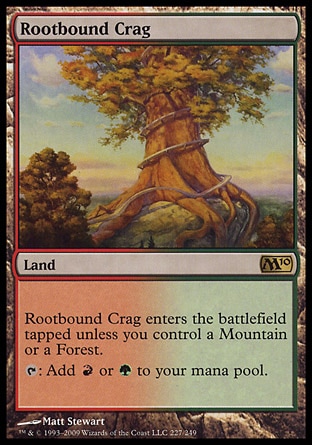
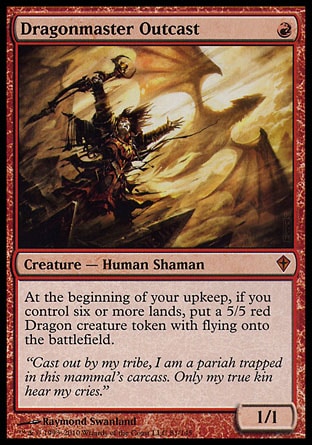
When I first started playing Boss Naya I immediately made two changes to it, swapping out the one-of Rootbound Crag for the new man-land Raging Ravine, giving me a new total of 4 man-lands and 7 come-into-play-tapped (CIPT) lands, which can dramatically slow down the deck. I also swapped out Scute Mob for the newer Dragonmaster Outcast thinking that having a board full of dragons would be better than one singularly large creature.
Having played with the deck, I've found that 7 CIPT lands can indeed create slow starts, but most of the time it is not that big an issue. The deck's best spells are four-drops anyway, so you have some time to play tapped lands without hurting your mana curve (which, sorry to say dear reader, is waaay too complicated a concept for me to go into right now if you are entirely unfamiliar with it or the game).
The Outcast, on the other hand, I didn't find to be quite as good as I initially thought. In certain match ups she was stellar, and she could destroy a stalemated board like no one's business. But if anyone ever played a Baneslayer, she was next to useless. Furthermore, she is slower than Scute Mob, both because she requires another land to become active and because the dragon token will have summoning sickness and be unable to attack the turn it comes into play. Scute Mob gets to swing for five the turn after it arrives, and equipped with Behemoth Sledge it is probably the singularly most terrifying creature ever.
So Ragging Ravine stuck, while Outcast has been ousted (for now at least). The other changes I made to the deck were after reading some articles by LSV himself. I added 2 Baneslayers to the maindeck and moved Tectonic Edge to the sideboard, replacing it with Sunpetal Grove to create better mana fixing. The deck's mana base can be fragile, and a colorless land is sometimes a setback. I took out 2 Birds of Paradise to fit in the Baneslayers, and man can I say that's improved my top-decking. I haven't tested this deck enough to be sure, but I'm fairly certain Baneslayer will be here to stay. She's just ridiculously powerful.
Anyway, the deck list I'm running now is posted below for your perusal:
Main Deck
Lands (24):
4 Arid Mesa
5 Forest
3 Misty Rainforest
2 Mountain
2 Plains
2 Raging Ravine
1 Sejiri Steppe
2 Stirring Wildwood
1 Sunpetal Grove
2 Terramorphic Expanse
Creatures (25):
2 Baneslayer Angel
4 Bloodbraid Elf
4 Knight of the Reliquary
4 Noble Hierarch
4 Ranger of Eos
1 Scute Mob
2 Stoneforge Mystic
4 Wild Nacatl
Spells (11):
2 Ajani Vengeant
1 Basilisk Collar
1 Behemoth Sledge
1 Elspeth, Knight-Errant
3 Lightning Bolt
2 Oblivion Ring
1 Path to Exile
Sideboard (15):
1 Baneslayer Angel
1 Basilisk Collar
1 Behemoth Sledge
4 Cunning Sparkmage
2 Dauntless Escort
2 Qasali Pridemage
2 Manabarbs
1 Oblivion Ring
1 Tectonic Edge
I hope the opening of this new column has given you some insight or at least been fun to read. I'm excited to test Boss Naya's mettle at a major event, but I don't know of any upcoming. However, stay tuned here, and I'm sure there will be other reports, deck breakdowns, and the likes to come. Thanks for reading.
Check us out at: sites.google.com/site/teamdamageonthestack
Even when just looking at a deck list, I find it easy to question another player's choices. The first (and easiest) place to attack is the sideboard. Players often have different opinions as to which cards are good in certain match-ups, and sometimes they may be able to eliminate certain cards from the board immediately, knowing that the match-ups those cards would be brought in for are not in their meta-game.
The maindeck is a little trickier. I often try to make changes to the maindeck just by looking at the list and theorizing or by trying to make educated determinations based on gold-fishing (which is when a player plays a deck against no one just drawing and seeing what comes up). This is a mistake. Only after becoming familiar with the deck is it advisable to make changes to it. Otherwise you risk eliminating cards that may serve a subtle purpose (perhaps in a particular match up) or removing interactions that are positive within the deck before realizing what they are.
When I first started playing Boss Naya I immediately made two changes to it, swapping out the one-of Rootbound Crag for the new man-land Raging Ravine, giving me a new total of 4 man-lands and 7 come-into-play-tapped (CIPT) lands, which can dramatically slow down the deck. I also swapped out Scute Mob for the newer Dragonmaster Outcast thinking that having a board full of dragons would be better than one singularly large creature.
Having played with the deck, I've found that 7 CIPT lands can indeed create slow starts, but most of the time it is not that big an issue. The deck's best spells are four-drops anyway, so you have some time to play tapped lands without hurting your mana curve (which, sorry to say dear reader, is waaay too complicated a concept for me to go into right now if you are entirely unfamiliar with it or the game).
The Outcast, on the other hand, I didn't find to be quite as good as I initially thought. In certain match ups she was stellar, and she could destroy a stalemated board like no one's business. But if anyone ever played a Baneslayer, she was next to useless. Furthermore, she is slower than Scute Mob, both because she requires another land to become active and because the dragon token will have summoning sickness and be unable to attack the turn it comes into play. Scute Mob gets to swing for five the turn after it arrives, and equipped with Behemoth Sledge it is probably the singularly most terrifying creature ever.
So Ragging Ravine stuck, while Outcast has been ousted (for now at least). The other changes I made to the deck were after reading some articles by LSV himself. I added 2 Baneslayers to the maindeck and moved Tectonic Edge to the sideboard, replacing it with Sunpetal Grove to create better mana fixing. The deck's mana base can be fragile, and a colorless land is sometimes a setback. I took out 2 Birds of Paradise to fit in the Baneslayers, and man can I say that's improved my top-decking. I haven't tested this deck enough to be sure, but I'm fairly certain Baneslayer will be here to stay. She's just ridiculously powerful.
Anyway, the deck list I'm running now is posted below for your perusal:
Main Deck
Lands (24):
4 Arid Mesa
5 Forest
3 Misty Rainforest
2 Mountain
2 Plains
2 Raging Ravine
1 Sejiri Steppe
2 Stirring Wildwood
1 Sunpetal Grove
2 Terramorphic Expanse
Creatures (25):
2 Baneslayer Angel
4 Bloodbraid Elf
4 Knight of the Reliquary
4 Noble Hierarch
4 Ranger of Eos
1 Scute Mob
2 Stoneforge Mystic
4 Wild Nacatl
Spells (11):
2 Ajani Vengeant
1 Basilisk Collar
1 Behemoth Sledge
1 Elspeth, Knight-Errant
3 Lightning Bolt
2 Oblivion Ring
1 Path to Exile
Sideboard (15):
1 Baneslayer Angel
1 Basilisk Collar
1 Behemoth Sledge
4 Cunning Sparkmage
2 Dauntless Escort
2 Qasali Pridemage
2 Manabarbs
1 Oblivion Ring
1 Tectonic Edge
I hope the opening of this new column has given you some insight or at least been fun to read. I'm excited to test Boss Naya's mettle at a major event, but I don't know of any upcoming. However, stay tuned here, and I'm sure there will be other reports, deck breakdowns, and the likes to come. Thanks for reading.
Check us out at: sites.google.com/site/teamdamageonthestack
Wednesday, March 10, 2010
Competitive Approach: Boss Naya (Part 3)
For those of you who don't know, a sideboard is an additional 15 cards added to a deck that can be swapped into the “maindeck” on a 1-for-1 basis (i.e. you have to take a card out of the maindeck every time you bring one in from the sideboard). The sideboard, which must be exactly 15 cards, is meant to enhance match-ups by tuning the deck.
What cards are in your sideboard are often determined by the meta-game that you as a player will be facing. If you think that it will be control heavy, then you will use cards that will make your deck better against control. If you think it will be aggro heavy, then you include cards that can shut down aggro. It is somewhat of a personalized matter based on what cards you think are good against the meta-game and based on what cards you want to side out of your deck.
In some cases decks also feature what are called “transformational sideboards” wherein the deck tries to do something entirely different in the second game of the match than it did in the first. This could be changing from an aggro deck to a mid-range or maybe even a combo or control deck. With only 15 cards at your disposal, this is hard to pull off, but some decks will allow you to do it.
Boss Naya is a deck that features a transformational sideboard in all of its incarnations (so far at least), but certain other sideboard options are still being tested and debated.
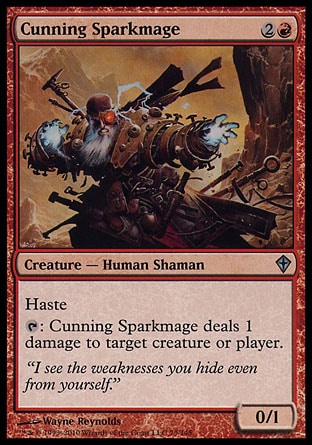
The transformation featured in each sideboard is the inclusion of Cunning Sparkmage, which pairs with Basilisk Collar, a combo that can kill almost every creature in the game. This package is brought in when the deck faces other aggro and creature-based decks (read: Baneslayer), opting for more removal while boarding out the Ranger of Eos and Wild Nacatl toolbox, which is much better against decks that are trying to control the board and not as interested in playing creatures.
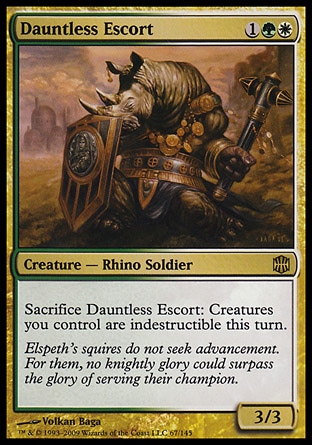
Against control decks putting out continual threats is much more important, so the vaunted equipment packed is replaced by Dauntless Escort, Manabarbs, and whatever other removal hate people think is good. I've seen Great Sable Stag and Summoning Trap boarded for this deck. Just saying.
Jund is a difficult match-up at all times. Generally, the idea is to bring in more Behemoth Sledge and try to play more threats than they can handle with their removal. However, another method is to bring in the Sparkmage combo and try to eliminate their threats, though in this case you would not board out the Ranger of Eos package. I'm not sure which is really better, and I guess as a player you will have to decide (if you choose to play this deck).
Sideboarding is an art that requires a lot of time spent with the deck and is based on the meta-game and specifically who your opponent is (and what you think you can get away with against him). There isn't any one way to go about it, and it often times the correct choices in one meta (like a major tournament) are much different than the correct choices in another (your local card shop's weekly events). What is important, especially when net-decking, is to realize why players made the choices they did before you go trying to change anything.
That doesn't mean that you should be afraid to make changes to a deck or to its sideboard. Decks are living organisms, if you will, and need to be adjusted to fit meta-games or even just so they don't get outdated. But you should be intelligent when going about it and understand what components you are replacing in the deck and why.
Upcoming: Changes I've made and considered making to Boss Naya
Check us out at: sites.google.com/site/teamdamageonthestack
What cards are in your sideboard are often determined by the meta-game that you as a player will be facing. If you think that it will be control heavy, then you will use cards that will make your deck better against control. If you think it will be aggro heavy, then you include cards that can shut down aggro. It is somewhat of a personalized matter based on what cards you think are good against the meta-game and based on what cards you want to side out of your deck.
In some cases decks also feature what are called “transformational sideboards” wherein the deck tries to do something entirely different in the second game of the match than it did in the first. This could be changing from an aggro deck to a mid-range or maybe even a combo or control deck. With only 15 cards at your disposal, this is hard to pull off, but some decks will allow you to do it.
Boss Naya is a deck that features a transformational sideboard in all of its incarnations (so far at least), but certain other sideboard options are still being tested and debated.
The transformation featured in each sideboard is the inclusion of Cunning Sparkmage, which pairs with Basilisk Collar, a combo that can kill almost every creature in the game. This package is brought in when the deck faces other aggro and creature-based decks (read: Baneslayer), opting for more removal while boarding out the Ranger of Eos and Wild Nacatl toolbox, which is much better against decks that are trying to control the board and not as interested in playing creatures.
Against control decks putting out continual threats is much more important, so the vaunted equipment packed is replaced by Dauntless Escort, Manabarbs, and whatever other removal hate people think is good. I've seen Great Sable Stag and Summoning Trap boarded for this deck. Just saying.
Jund is a difficult match-up at all times. Generally, the idea is to bring in more Behemoth Sledge and try to play more threats than they can handle with their removal. However, another method is to bring in the Sparkmage combo and try to eliminate their threats, though in this case you would not board out the Ranger of Eos package. I'm not sure which is really better, and I guess as a player you will have to decide (if you choose to play this deck).
Sideboarding is an art that requires a lot of time spent with the deck and is based on the meta-game and specifically who your opponent is (and what you think you can get away with against him). There isn't any one way to go about it, and it often times the correct choices in one meta (like a major tournament) are much different than the correct choices in another (your local card shop's weekly events). What is important, especially when net-decking, is to realize why players made the choices they did before you go trying to change anything.
That doesn't mean that you should be afraid to make changes to a deck or to its sideboard. Decks are living organisms, if you will, and need to be adjusted to fit meta-games or even just so they don't get outdated. But you should be intelligent when going about it and understand what components you are replacing in the deck and why.
Upcoming: Changes I've made and considered making to Boss Naya
Check us out at: sites.google.com/site/teamdamageonthestack
Monday, March 8, 2010
Competitive Approach: Boss Naya (Part 2)
Those of you out there who are not up-to-date with the current card pool may find this posting to be rather boring. Since it would take me forever to explain what each card does, I've linked to the cards I've named so that all of you who don't know them will have a better understanding. Hopefully that will help, but this post might get a little technical...so I understand (though grudgingly) if you want to pass on this one and wait til next time.
Now, moving on.
The Boss Naya deck is an aggro/mid-range deck capable of dropping early threats and using cards like Noble Hierarch and Birds of Paradise to accelerate into heavier threats. The deck becomes strong when it hits its four-drops like Ranger of Eos, Bloodbraid Elf, and Ajani Vengeant or Elspeth, Knight Errant. Each of these cards is extremely powerful and can quickly turn a game around.
Boss Naya is also a toolbox deck. A toolbox deck is a deck that is reliant on “tutors”, cards that search out specific cards in your deck (or “library” as it's called). Tutors get their name from a series of cards, the most famous of which is Demonic Tutor, a card that allows a player to search out any card in his or her deck. Boss Naya has three tutoring cards: Ranger of Eos, Stoneforge Mystic, and Knight of the Reliquary.
Ranger of Eos allows the pilot to search for his one-drop creatures (creatures that cost one mana to play). Stoneforge Mystic searches for equipment that makes all creatures better. And Knight of the Reliquary searches for lands, and in the Zendikar block there are some lands that have effects when they come into play (or “enter the battlefield” as the new jargon states).
Ranger of Eos and Stoneforge Mystic both make the deck extremely resilient, putting more creatures into your hand and putting equipment onto the field that makes every creature (even your lowly accelerants) a threat. Knight of the Reliquary gives the deck a slew of combat tricks that can quickly turn the tide of battle.
Bloodbraid Elf is also a tutor in its own way, though it doesn't search for anything specific. Its Cascade ability, which has made Jund so powerful, means that you are potentially playing two spells instead of one when you cast it. What better bargain can you get than that?
The reason I think this deck is so good is that it can be extremely fast and overwhelming. But if it isn't, or if the opponent manages to slow it down, it has enough resilience to come back and retake the board. I was playing a game against an opponent last week where I managed to stabilize at 6 life and turn the game around and win, something that most normal aggro decks don't do. The toolbox gives you a continual stream of threats and a lot of versatility, something that not every deck can boast.
I'm posting the list that LSV ran to a 12-1 record below. It is currently the list that I am playing. In the next post I will go over how the sideboard for this deck works. It was actually a mystery to me until recently, so I'm hoping I can explain it well.
Luis Scott-Vargas (USA)
Pro Tour–San Diego Top 8
Main Deck
60 cards
4 Arid Mesa
5 Forest
3 Misty Rainforest
2 Mountain
2 Plains
1 Raging Ravine
1 Rootbound Crag
1 Sejiri Steppe
2 Stirring Wildwood
1 Tectonic Edge
2 Terramorphic Expanse
--------------------------------------------------------------------------------
24 lands
2 Birds of Paradise
4 Bloodbraid Elf
4 Knight of the Reliquary
4 Noble Hierarch
4 Ranger of Eos
1 Scute Mob
2 Stoneforge Mystic
4 Wild Nacatl
--------------------------------------------------------------------------------
25 creatures 2 Ajani Vengeant
1 Basilisk Collar
1 Behemoth Sledge
1 Elspeth, Knight-Errant
3 Lightning Bolt
2 Oblivion Ring
1 Path to Exile
--------------------------------------------------------------------------------
11 other spells
Sideboard
2 Baneslayer Angel
1 Basilisk Collar
1 Behemoth Sledge
4 Cunning Sparkmage
2 Dauntless Escort
1 Goblin Guide
2 Manabarbs
1 Oblivion Ring
1 Stoneforge Mystic
--------------------------------------------------------------------------------
15 sideboard cards
Upcoming: Sideboarding for Boss Naya
Check us out at: sites.google.com/site/teamdamageonthestack
Now, moving on.
The Boss Naya deck is an aggro/mid-range deck capable of dropping early threats and using cards like Noble Hierarch and Birds of Paradise to accelerate into heavier threats. The deck becomes strong when it hits its four-drops like Ranger of Eos, Bloodbraid Elf, and Ajani Vengeant or Elspeth, Knight Errant. Each of these cards is extremely powerful and can quickly turn a game around.
Boss Naya is also a toolbox deck. A toolbox deck is a deck that is reliant on “tutors”, cards that search out specific cards in your deck (or “library” as it's called). Tutors get their name from a series of cards, the most famous of which is Demonic Tutor, a card that allows a player to search out any card in his or her deck. Boss Naya has three tutoring cards: Ranger of Eos, Stoneforge Mystic, and Knight of the Reliquary.
Ranger of Eos allows the pilot to search for his one-drop creatures (creatures that cost one mana to play). Stoneforge Mystic searches for equipment that makes all creatures better. And Knight of the Reliquary searches for lands, and in the Zendikar block there are some lands that have effects when they come into play (or “enter the battlefield” as the new jargon states).
Ranger of Eos and Stoneforge Mystic both make the deck extremely resilient, putting more creatures into your hand and putting equipment onto the field that makes every creature (even your lowly accelerants) a threat. Knight of the Reliquary gives the deck a slew of combat tricks that can quickly turn the tide of battle.
Bloodbraid Elf is also a tutor in its own way, though it doesn't search for anything specific. Its Cascade ability, which has made Jund so powerful, means that you are potentially playing two spells instead of one when you cast it. What better bargain can you get than that?
The reason I think this deck is so good is that it can be extremely fast and overwhelming. But if it isn't, or if the opponent manages to slow it down, it has enough resilience to come back and retake the board. I was playing a game against an opponent last week where I managed to stabilize at 6 life and turn the game around and win, something that most normal aggro decks don't do. The toolbox gives you a continual stream of threats and a lot of versatility, something that not every deck can boast.
I'm posting the list that LSV ran to a 12-1 record below. It is currently the list that I am playing. In the next post I will go over how the sideboard for this deck works. It was actually a mystery to me until recently, so I'm hoping I can explain it well.
Luis Scott-Vargas (USA)
Pro Tour–San Diego Top 8
Main Deck
60 cards
4 Arid Mesa
5 Forest
3 Misty Rainforest
2 Mountain
2 Plains
1 Raging Ravine
1 Rootbound Crag
1 Sejiri Steppe
2 Stirring Wildwood
1 Tectonic Edge
2 Terramorphic Expanse
--------------------------------------------------------------------------------
24 lands
2 Birds of Paradise
4 Bloodbraid Elf
4 Knight of the Reliquary
4 Noble Hierarch
4 Ranger of Eos
1 Scute Mob
2 Stoneforge Mystic
4 Wild Nacatl
--------------------------------------------------------------------------------
25 creatures 2 Ajani Vengeant
1 Basilisk Collar
1 Behemoth Sledge
1 Elspeth, Knight-Errant
3 Lightning Bolt
2 Oblivion Ring
1 Path to Exile
--------------------------------------------------------------------------------
11 other spells
Sideboard
2 Baneslayer Angel
1 Basilisk Collar
1 Behemoth Sledge
4 Cunning Sparkmage
2 Dauntless Escort
1 Goblin Guide
2 Manabarbs
1 Oblivion Ring
1 Stoneforge Mystic
--------------------------------------------------------------------------------
15 sideboard cards
Upcoming: Sideboarding for Boss Naya
Check us out at: sites.google.com/site/teamdamageonthestack
Sunday, March 7, 2010
Competitive Approach: Boss Naya (Part 1)
Ladies and gents, today marks an exciting time for the DOTS blog...it's the start of a new column! Competitive Approach will be a column I work at in order to break down some competitive constructed Magic in order to show all of you the ways that I approach building a deck, preparing for tournaments, etc. I hope that this could help you in any attempts you make at competitive play, or at the very least give you some fun insight into that aspect of the game.
Anyway, the first step towards playing any constructed format is to choose a deck. I know I ranted and raved about the evils of it in my Casual Magic series, but when playing competitively the first thing that I do is net-deck. For those of you who have forgotten, “net-decking” is when you look up decks other players have played successfully using the vast, omnipotent powers of the Internet.
For casual Magic I would say net-decking ruins the spirit of things, but for competitive Magic (unless you're some big innovative mind) I think it's a lot better to play a deck that has a successful track record. Every player wants to create a new deck that garners attention and influences changes in the meta-game, but most of the time that's not how it works out. Competitive constructed play is about who is the better player (or pilot, as we call them), not who is more creative, and it is easier to get your name out there by winning tournaments rather than creating new decks.
From following my event coverage you probably know that I've tried out a couple of decks this season: white weenie, Jund, Bant, and Knightfall. Knightfall (or Junk) was definitely the most effective deck for me, and I may yet return to it, but a new breakout list has caught my attention, and I must tell you it is fun as hell to play.
“Boss Naya” derives its name from its creator and the colors it uses. Tom “the Boss” Ross was the man who created the deck, and Louis-Scott Vargas piloted a version of it to a 10-0 record at Pro Tour San Diego.
“Naya” is a name that came from the Shards of Alara block for Magic (much the same as Jund or Bant). In Shards of Alara there were five shards, each of which featured three colors. Naya features green, white and red. Now not every card in the deck is from Shards of Alara, but the names of the shards have come to represent any deck that use its three respective colors.
Anyway, after having watched people play this deck at the last 5K in Edison, and reading about it online, I decided to give it a whirl. Tune in next time as I give a breakdown of the deck and why I think it is so good.
Upcoming: a dissection of “Boss Naya”
Check us out at: sites.google.com/site/teamdamageonthestack
Anyway, the first step towards playing any constructed format is to choose a deck. I know I ranted and raved about the evils of it in my Casual Magic series, but when playing competitively the first thing that I do is net-deck. For those of you who have forgotten, “net-decking” is when you look up decks other players have played successfully using the vast, omnipotent powers of the Internet.
For casual Magic I would say net-decking ruins the spirit of things, but for competitive Magic (unless you're some big innovative mind) I think it's a lot better to play a deck that has a successful track record. Every player wants to create a new deck that garners attention and influences changes in the meta-game, but most of the time that's not how it works out. Competitive constructed play is about who is the better player (or pilot, as we call them), not who is more creative, and it is easier to get your name out there by winning tournaments rather than creating new decks.
From following my event coverage you probably know that I've tried out a couple of decks this season: white weenie, Jund, Bant, and Knightfall. Knightfall (or Junk) was definitely the most effective deck for me, and I may yet return to it, but a new breakout list has caught my attention, and I must tell you it is fun as hell to play.
“Boss Naya” derives its name from its creator and the colors it uses. Tom “the Boss” Ross was the man who created the deck, and Louis-Scott Vargas piloted a version of it to a 10-0 record at Pro Tour San Diego.
“Naya” is a name that came from the Shards of Alara block for Magic (much the same as Jund or Bant). In Shards of Alara there were five shards, each of which featured three colors. Naya features green, white and red. Now not every card in the deck is from Shards of Alara, but the names of the shards have come to represent any deck that use its three respective colors.
Anyway, after having watched people play this deck at the last 5K in Edison, and reading about it online, I decided to give it a whirl. Tune in next time as I give a breakdown of the deck and why I think it is so good.
Upcoming: a dissection of “Boss Naya”
Check us out at: sites.google.com/site/teamdamageonthestack
Sunday, February 28, 2010
A Brief Look at Worldwake
Worldwake is the newest set in Magic and has added some new cards into the mix, changing up both Standard and Limited. The biggest additions that were immediately evident were new blue cards. If you remember when I wrote about the four different deck archetypes (aggro, mid-range, combo, control), I wrote about control decks and how those work. For the last three years (or more) control has dominated the Standard meta-game, and most control decks are reliant on very strong blue cards, which there had been many of in past years. In the most recently released sets the power of blue has diminished...well, until Worldwake.
Though Worldwake doesn't feature any strong counter spells, which is traditionally the backbone of control decks, it does feature a powerful new planeswalker and some very relevant card drawing enhancers. Control isn't the dominant force it used to be by any means (which makes me incredibly happy, let me tell you), but it's starting to make a comeback, most notably with Patrick Chapin's new blue/white control deck.
While everyone saw (and was really excited about) the rise in power level for blue, there were a couple of other cards that have clawed their way into constructed play. The most surprising of these cards, I think, is one called Stoneforge Mystic, a small white creature who searches out an equipment card from your deck when she comes into play (or enters the battlefield as they say these days). Word on the street, even early on, was that she would be good in the next set, which is slated for release in April. However, Louis-Scott Vargas (LSV) featured her in his new Naya aggro deck which got him a 10-0 record at PT San Diego. Now this little mystic's price is quickly scaling the charts.
But, other than that, I would have to say the biggest contribution of Worldwake is its new man-lands, which are dual lands, unlike the originals which were mono-colored (for those of you who don't know, a dual land is a land that taps for two colors of mana). They have greatly enhanced already existing decks like Jund and made possibly previously unplayed decks like blue/white control.
All in all I would say that Worldwake adds a nice dimension to the competitive formats without introducing any cards that are ridiculously dominating. It's true that the new planeswalker (Jace 2.0, aka “The Wallet Sculptor” named for his $60 price tag) is incredibly powerful, but after having played against it, I don't believe he changes the dynamic of the game in an unfair way. While he has allowed for the advent of new decks, he hasn't made decks that were already being played irrelevant.
I am unsure of when the next major event is (or at least the next one that Team DOTS will attend is), but of course, when there is event coverage it will be posted here. In the meantime I think I will chronicle some of my experiences at local events and try to give all of you readers out there some insight into how I go about choosing, constructing, and fine-tuning decks.
Upcoming: whatever I just said would be upcoming
Check us out at: sites.google.com/site/teamdamageonthestack
Though Worldwake doesn't feature any strong counter spells, which is traditionally the backbone of control decks, it does feature a powerful new planeswalker and some very relevant card drawing enhancers. Control isn't the dominant force it used to be by any means (which makes me incredibly happy, let me tell you), but it's starting to make a comeback, most notably with Patrick Chapin's new blue/white control deck.
While everyone saw (and was really excited about) the rise in power level for blue, there were a couple of other cards that have clawed their way into constructed play. The most surprising of these cards, I think, is one called Stoneforge Mystic, a small white creature who searches out an equipment card from your deck when she comes into play (or enters the battlefield as they say these days). Word on the street, even early on, was that she would be good in the next set, which is slated for release in April. However, Louis-Scott Vargas (LSV) featured her in his new Naya aggro deck which got him a 10-0 record at PT San Diego. Now this little mystic's price is quickly scaling the charts.
But, other than that, I would have to say the biggest contribution of Worldwake is its new man-lands, which are dual lands, unlike the originals which were mono-colored (for those of you who don't know, a dual land is a land that taps for two colors of mana). They have greatly enhanced already existing decks like Jund and made possibly previously unplayed decks like blue/white control.
All in all I would say that Worldwake adds a nice dimension to the competitive formats without introducing any cards that are ridiculously dominating. It's true that the new planeswalker (Jace 2.0, aka “The Wallet Sculptor” named for his $60 price tag) is incredibly powerful, but after having played against it, I don't believe he changes the dynamic of the game in an unfair way. While he has allowed for the advent of new decks, he hasn't made decks that were already being played irrelevant.
I am unsure of when the next major event is (or at least the next one that Team DOTS will attend is), but of course, when there is event coverage it will be posted here. In the meantime I think I will chronicle some of my experiences at local events and try to give all of you readers out there some insight into how I go about choosing, constructing, and fine-tuning decks.
Upcoming: whatever I just said would be upcoming
Check us out at: sites.google.com/site/teamdamageonthestack
Sunday, February 21, 2010
Another 5K in Edison
Yesterday found Team DOTS at another 5K event out in Edison, New Jersey. Unfortunately not many of our team members were able or willing to make it, so it ended up just being Matt, Izzy, and myself. Other players we know were in attendance like Joe Shi, our friends Alex and Calcano, and a new friend of ours Andrew Gill. As I mentioned in a previous post, all 5K's (that I know of) are either in the Standard or Legacy formats. This was another Standard event, as I think Conta is the only person on this team who seriously competes in Legacy, at least at the moment.
As Izzy could tell you, I was having some serious frustrations leading up to this event. I didn't think any deck that I had the cards to make would be any good. I had tried my hand at Jund, the dominant deck in the format, and come up short with it every time. For the past month or so I had been playing around with a Bant deck and in the last week switched over to Knightfall (AKA Junk). Both of these decks are white and green, but Bant has a blue splash and Knightfall has a black one. I wasn't particularly happy with either of them after testing.
The problem with these decks, and many mid-range decks actually, is that they run a high number of accelerants to let you drop your big spells early (both decks are actually able to drop 5-cost spells on Turn 3). However, as any good arson will tell you, if all you don't have any matches, there won't be much of a fire. Basically what I'm saying is that in testing I found that when I needed to draw either a threat or a solution, what I ended up drawing a lot of the time were my accelerants, and that ended up costing me games. I wanted desperately to have a good showing at a big event, not necessarily to win or even Top 8, but just to place respectably and feel like I'm actually good at this game.
After some debate and thoughts about messing around with the Knightfall list and running fewer accelerants, I decided to run the list as it was and just to see how it went. Izzy stuck with her Jund deck, which is pretty much always a good option. Matt, ever the control player, had been playing Grixis control (black, red, blue) leading up to the tournament, but the night before decided to switch to a totally different white/blue control deck that Patrick Chapin had debuted at the San Diego Pro Tour (which just happened this weekend).
Izzy ended up doing the worst of us, going 3-3 and losing to a Summoning Trap deck in Round 6. She decided to drop after that, though a 3-3 record is fairly respectable. Matt and I both had opportunities to place high, and Matt may have actually had a shot at Top 8. We were both 5-2, Matt punting his seventh round match after starting 5-1, and me winning three matches in a row after a 2-2 opening. Matt drew his last match in a control mirror (which always takes a really long time), and then his opponent got angry that he wouldn't concede to him and let him into the Top 8 (what a dick, really). I got paired up against Vampires in the last round (a terrible match-up for my deck), and managed to win the first game. Then I punted game two and ended up losing the match.
Note: “Punting” like in football when you kickoff to the other team, is when a player makes a mistake that basically hands the game over to his or her opponent.
However, overall I was happy with the way things turned out. My deck performed well, and I drew relevant cards at the right time, which had been my concern going into the tournament. I even had a chance to beat one of my worst match-ups, and I think I would have if I had played correctly. I think I will even stick with this deck for a bit, though the new Naya deck looks ridiculously amazing and at least warrants some testing (sadly they are sold out of the cards I need for it on both of the sites I usually shop from).
I should give shout-outs to both Alex and Joe Shi, who ended up being in the Top 4 after winning their first rounds in the Top 8. They then split the prize with two other players and wound up with 1G each. Both of them were playing Jund, if you were curious.
I know I had intended to do this earlier, but the next article will be a short write-up on Worldwake. I have a slightly better perspective on it now that I've played with and against it both in Standard and in Limited. And I have to say that some cards I really didn't think were that good have broken into Standard, especially in the new Naya deck (red, white, green aggro) that Louis-Scott Vargas rode to a 10-0 in the Standard portion of the swiss this weekend at PT San Diego. He went undefeated until the semi-finals.
Upcoming: A Worldwake Review
Check us out at: sites.google.com/site/teamdamageonthestack
As Izzy could tell you, I was having some serious frustrations leading up to this event. I didn't think any deck that I had the cards to make would be any good. I had tried my hand at Jund, the dominant deck in the format, and come up short with it every time. For the past month or so I had been playing around with a Bant deck and in the last week switched over to Knightfall (AKA Junk). Both of these decks are white and green, but Bant has a blue splash and Knightfall has a black one. I wasn't particularly happy with either of them after testing.
The problem with these decks, and many mid-range decks actually, is that they run a high number of accelerants to let you drop your big spells early (both decks are actually able to drop 5-cost spells on Turn 3). However, as any good arson will tell you, if all you don't have any matches, there won't be much of a fire. Basically what I'm saying is that in testing I found that when I needed to draw either a threat or a solution, what I ended up drawing a lot of the time were my accelerants, and that ended up costing me games. I wanted desperately to have a good showing at a big event, not necessarily to win or even Top 8, but just to place respectably and feel like I'm actually good at this game.
After some debate and thoughts about messing around with the Knightfall list and running fewer accelerants, I decided to run the list as it was and just to see how it went. Izzy stuck with her Jund deck, which is pretty much always a good option. Matt, ever the control player, had been playing Grixis control (black, red, blue) leading up to the tournament, but the night before decided to switch to a totally different white/blue control deck that Patrick Chapin had debuted at the San Diego Pro Tour (which just happened this weekend).
Izzy ended up doing the worst of us, going 3-3 and losing to a Summoning Trap deck in Round 6. She decided to drop after that, though a 3-3 record is fairly respectable. Matt and I both had opportunities to place high, and Matt may have actually had a shot at Top 8. We were both 5-2, Matt punting his seventh round match after starting 5-1, and me winning three matches in a row after a 2-2 opening. Matt drew his last match in a control mirror (which always takes a really long time), and then his opponent got angry that he wouldn't concede to him and let him into the Top 8 (what a dick, really). I got paired up against Vampires in the last round (a terrible match-up for my deck), and managed to win the first game. Then I punted game two and ended up losing the match.
Note: “Punting” like in football when you kickoff to the other team, is when a player makes a mistake that basically hands the game over to his or her opponent.
However, overall I was happy with the way things turned out. My deck performed well, and I drew relevant cards at the right time, which had been my concern going into the tournament. I even had a chance to beat one of my worst match-ups, and I think I would have if I had played correctly. I think I will even stick with this deck for a bit, though the new Naya deck looks ridiculously amazing and at least warrants some testing (sadly they are sold out of the cards I need for it on both of the sites I usually shop from).
I should give shout-outs to both Alex and Joe Shi, who ended up being in the Top 4 after winning their first rounds in the Top 8. They then split the prize with two other players and wound up with 1G each. Both of them were playing Jund, if you were curious.
I know I had intended to do this earlier, but the next article will be a short write-up on Worldwake. I have a slightly better perspective on it now that I've played with and against it both in Standard and in Limited. And I have to say that some cards I really didn't think were that good have broken into Standard, especially in the new Naya deck (red, white, green aggro) that Louis-Scott Vargas rode to a 10-0 in the Standard portion of the swiss this weekend at PT San Diego. He went undefeated until the semi-finals.
Upcoming: A Worldwake Review
Check us out at: sites.google.com/site/teamdamageonthestack
Monday, February 1, 2010
Casual Magic, Part 4: The Final Installment...Duhn duhn duuuuhhhhnnnnn!
I started playing Magic for the first time around 4th Grade. I remember taking the bus back from after school with a friend of mine, and we were puzzling over what the “X” in the mana cost of Disintegrate could possibly mean. A random kid who overheard us talking and knew about the game explained that it was a variable, and “X” could be as much as you wanted it to be, or more accurately, as much as mana as you could pay for it. So if you had 21 lands, you could deal 20 damage to your opponent's face? Amazing. We had instantly found our new favorite spell.
As you can probably tell from that little anecdote, my friends and I really knew nothing about the game. Everything to us was a creature beat-down fest. Burn was used, except in very rare occasions, to deal damage to a player, not as removal. Spells like Wrath of God were just unplayable. I mean why would you play something that killed “all creatures” and not just your opponent's? And you can just straight up forget about notions like ordering triggers, responding to effects, or using the stack (which actually didn't exist when I started playing).
There are moments when I yearn for this time before time, when everyone's boards were just massive lines of creatures that were unencumbered by the fear of board wipes; when instants were played as sorceries (unless they were counter spells) because why would it matter?; when enchantment destruction, artifact removal, and walls were all main deck necessities. And when I play casual Magic, this is the state I try to return to.
I don't want to play powerful cards in a casual deck (though if you look at my casual decks you probably think I'm lying, but playing against other high-power casual decks requires me to make some concessions unfortunately). I also don't like getting my casual play critiqued. When playing competitively or testing for competitive play, I definitely value the opinions of other plays and want to know if I made any mistakes, but when I'm playing a deck that's supposed to be fun I go on auto-pilot, and I don't really care if I make mistakes. As far as I'm concerned making optimal plays is for competition. If you happen to make them in casual play, that's fine too, but I personally don't enjoy having my decisions questioned by other players during games that are just supposed to be for fun.
Over the last week or so, since I started posting this series of articles, I've had some debates with other friends of mine on the topic (and you can get some of their opinions in the comments on previous posts). Conta made the excellent point that the power-level of a casual deck should really just be determined by how willing your friends are to play against it. If everyone in your crew is okay with you rocking four copies of every restricted card, then really that's fine.
Ultimately I think his assertion is correct. Casual is really what you make of it, and as long as you and your friends are having fun that's what is most important.
However, for me the fun lies in trying to make decks that are far from being playable in any sort of competitive format, that play cards that don't see competitive play (bonus points if they have awesome art too), and that are generally built around themes (my Elder Dragon Highlander deck only runs creatures that are Angels). I think casual should be a format that is about creativity, doing wacky things you don't normally see, and showing some love to those cards that are just not good enough to cut it in a competitive environment.
Again, I can't tell you how to play your casual games. That would sort of defeat the point of the whole idea. If the fun for you is playing really overpowered decks, then that's cool. There is only one cardinal rule to playing “casual” Magic, and that is to make sure everyone involved is having fun. If you've found that this isn't the case for you and your friends, maybe you should try some of this advice. Hopefully it'll help you out.
Upcoming: A recap of World Wake pre-release at the Fight House
Check us out at: sites.google.com/site/teamdamageonthestack
As you can probably tell from that little anecdote, my friends and I really knew nothing about the game. Everything to us was a creature beat-down fest. Burn was used, except in very rare occasions, to deal damage to a player, not as removal. Spells like Wrath of God were just unplayable. I mean why would you play something that killed “all creatures” and not just your opponent's? And you can just straight up forget about notions like ordering triggers, responding to effects, or using the stack (which actually didn't exist when I started playing).
There are moments when I yearn for this time before time, when everyone's boards were just massive lines of creatures that were unencumbered by the fear of board wipes; when instants were played as sorceries (unless they were counter spells) because why would it matter?; when enchantment destruction, artifact removal, and walls were all main deck necessities. And when I play casual Magic, this is the state I try to return to.
I don't want to play powerful cards in a casual deck (though if you look at my casual decks you probably think I'm lying, but playing against other high-power casual decks requires me to make some concessions unfortunately). I also don't like getting my casual play critiqued. When playing competitively or testing for competitive play, I definitely value the opinions of other plays and want to know if I made any mistakes, but when I'm playing a deck that's supposed to be fun I go on auto-pilot, and I don't really care if I make mistakes. As far as I'm concerned making optimal plays is for competition. If you happen to make them in casual play, that's fine too, but I personally don't enjoy having my decisions questioned by other players during games that are just supposed to be for fun.
Over the last week or so, since I started posting this series of articles, I've had some debates with other friends of mine on the topic (and you can get some of their opinions in the comments on previous posts). Conta made the excellent point that the power-level of a casual deck should really just be determined by how willing your friends are to play against it. If everyone in your crew is okay with you rocking four copies of every restricted card, then really that's fine.
Ultimately I think his assertion is correct. Casual is really what you make of it, and as long as you and your friends are having fun that's what is most important.
However, for me the fun lies in trying to make decks that are far from being playable in any sort of competitive format, that play cards that don't see competitive play (bonus points if they have awesome art too), and that are generally built around themes (my Elder Dragon Highlander deck only runs creatures that are Angels). I think casual should be a format that is about creativity, doing wacky things you don't normally see, and showing some love to those cards that are just not good enough to cut it in a competitive environment.
Again, I can't tell you how to play your casual games. That would sort of defeat the point of the whole idea. If the fun for you is playing really overpowered decks, then that's cool. There is only one cardinal rule to playing “casual” Magic, and that is to make sure everyone involved is having fun. If you've found that this isn't the case for you and your friends, maybe you should try some of this advice. Hopefully it'll help you out.
Upcoming: A recap of World Wake pre-release at the Fight House
Check us out at: sites.google.com/site/teamdamageonthestack
Wednesday, January 27, 2010
Casual Magic, Part 3: The Internet Invasion
When I was growing up, the Internet wasn't such a huge thing, or at least not as dominating of life and the mainstream as it has become. AOL was at its prime during middle school, so chatting over that was big, but school still didn't allow you to use Internet sources for papers or research. I actually wasn't allowed to do that until late in high school and in college. These days kids are much more net literate and savvy as they are indoctrinated into the idea and the culture of it much earlier in life.
So what does this have to do with Magic? Well, like most things, Magic has been greatly affected by the rise of the Internet. The ability to have information about all of the latest deck lists, competitive results, and news just a click away has changed a lot of things. And I won't even go into Magic Online.
A couple of years ago I was having a conversation with my friends Dre and Kanvaly. Dre and I originally started playing Magic in the early days around the release of sets like Fallen Empires or Ice Age. Dre eventually quit (more or less), and I played off-and-on a lot until recently when I've become much more serious about the whole thing. Kanvaly didn't really start playing until I restarted for the last time in college, when I endeavored to get my friends to play as well.
Dre and I were reminiscing about how things used to be, how every deck we made was organic and developed from our own concepts, or concepts we had seen other players use. None of it was at all influenced by looking up deck lists on the Internet (or “net-decking” as Magic players term it). At the time we spoke of net-decking with a certain amount of disdain as well, like it was almost cheating in terms of deck construction.
Kanvaly didn't understand why we looked down on it so much. He saw the whole thing in terms of a meta-game, which is actually probably an easier way to look at this. In our days of yore, the meta-game was who you knew. So your deck didn't have to be any better than those of the people you played against on a regular basis (like your classmates in the case of Dre and I). Nowadays, with deck lists easily available on the Internet, the meta-game is essentially the entire world.
So how does this tie into casual Magic? Well, I would say that net-decking is not an appropriate way to attempt to build a casual deck for anybody (not just competitive players).
I net-deck all the time when it comes to competitive Magic. I would actually not feel comfortable playing a deck in a tournament that did not already have at least one Top 8 placement in a major event. I'm not an innovator. I know this about myself. And when it comes to competition, all I am trying to be is the best pilot in the room, not the most creative one.
But casual Magic is all about innovation. It's about looking at the cards you have (or could easily acquire I suppose) and seeing what sort of crazy deck you can make from them. Like I said in my previous post, the goal for a casual deck should be to do something fun, funky, and fresh, not to deliver a beatdown concocted by another player.
Net-decking takes away innovation, and while it's great to be able to share ideas with the community at large and to debate the theories of Magic and deck construction, you tend to speed up the learning curve. Taking ideas from players takes away the fun exploratory element of Magic, the part where you learn for yourself how good or bad a card is. It also leads to deck optimization, which, like I said last time, defeats the point of casual (in my opinion).
So, my message to you, if you want to make a fun casual deck, stay away from the Internet. Just make something with the cards you have, and see where you can take it. Don't go looking for how someone else did it, or how they made it better. Figure it out for yourself, and just have fun messing around with it.
Upcoming: Casual Magic, Part 4: The Final Installment...Duhn duhn duuuuhhhhnnnnn!
Check us out at: sites.google.com/site/teamdamageonthestack
So what does this have to do with Magic? Well, like most things, Magic has been greatly affected by the rise of the Internet. The ability to have information about all of the latest deck lists, competitive results, and news just a click away has changed a lot of things. And I won't even go into Magic Online.
A couple of years ago I was having a conversation with my friends Dre and Kanvaly. Dre and I originally started playing Magic in the early days around the release of sets like Fallen Empires or Ice Age. Dre eventually quit (more or less), and I played off-and-on a lot until recently when I've become much more serious about the whole thing. Kanvaly didn't really start playing until I restarted for the last time in college, when I endeavored to get my friends to play as well.
Dre and I were reminiscing about how things used to be, how every deck we made was organic and developed from our own concepts, or concepts we had seen other players use. None of it was at all influenced by looking up deck lists on the Internet (or “net-decking” as Magic players term it). At the time we spoke of net-decking with a certain amount of disdain as well, like it was almost cheating in terms of deck construction.
Kanvaly didn't understand why we looked down on it so much. He saw the whole thing in terms of a meta-game, which is actually probably an easier way to look at this. In our days of yore, the meta-game was who you knew. So your deck didn't have to be any better than those of the people you played against on a regular basis (like your classmates in the case of Dre and I). Nowadays, with deck lists easily available on the Internet, the meta-game is essentially the entire world.
So how does this tie into casual Magic? Well, I would say that net-decking is not an appropriate way to attempt to build a casual deck for anybody (not just competitive players).
I net-deck all the time when it comes to competitive Magic. I would actually not feel comfortable playing a deck in a tournament that did not already have at least one Top 8 placement in a major event. I'm not an innovator. I know this about myself. And when it comes to competition, all I am trying to be is the best pilot in the room, not the most creative one.
But casual Magic is all about innovation. It's about looking at the cards you have (or could easily acquire I suppose) and seeing what sort of crazy deck you can make from them. Like I said in my previous post, the goal for a casual deck should be to do something fun, funky, and fresh, not to deliver a beatdown concocted by another player.
Net-decking takes away innovation, and while it's great to be able to share ideas with the community at large and to debate the theories of Magic and deck construction, you tend to speed up the learning curve. Taking ideas from players takes away the fun exploratory element of Magic, the part where you learn for yourself how good or bad a card is. It also leads to deck optimization, which, like I said last time, defeats the point of casual (in my opinion).
So, my message to you, if you want to make a fun casual deck, stay away from the Internet. Just make something with the cards you have, and see where you can take it. Don't go looking for how someone else did it, or how they made it better. Figure it out for yourself, and just have fun messing around with it.
Upcoming: Casual Magic, Part 4: The Final Installment...Duhn duhn duuuuhhhhnnnnn!
Check us out at: sites.google.com/site/teamdamageonthestack
Sunday, January 24, 2010
Casual Magic, Part 2: Deck Construction
My friend and co-author Conta recently unveiled an amazing casual deck that I think fully captures the idea of what “casual” should be. It's called “The Harry Potter Deck”, and its card choices are based thematically around Voldemort and his army of Death Eaters. Endrek Sahr represents the dark lord himself, while Orzhov Guildmages represent the Death Eaters, Hypnotic Specters represent the Dementors, a series of artifacts represent the Horcruxes, and so on. Even if you don't play Magic or know what each of these cards is, I think you can appreciate that all of the card choices correspond to something from the popular wizard novels.
In my opinion, Conta's approach to deck construction with this deck is what casual is all about. Putting a limiting factor on what cards you are able to use is a good way to keep the deck's power-level low, and using a theme is one of the better ways to do this. It's hard to do this by saying you won't use certain “powerful cards” because that is really too vague. If instead you try to stick hard and fast to some sort of thematic rule, you'll end up having to play cards that aren't very good but likely have a deck that will be a lot of fun (which I think is the whole point of casual play).
Our friend and teammate Kanvaly took one look through “The Harry Potter Deck” and started to question the card choices. Why don't you run Card X instead of Card Y? It's strictly better. Basically, he was unimpressed with the power-level and wanted the deck to have better cards regardless of what this meant to the integrity of the theme (though to be fair, he has never read Harry Potter).
This is where I think casual starts to go wrong. If you begin to optimize a deck, the power-level begins to rise, and this is where the imbalances start to set in. The deck enters this area of limbo where it's more of a jank competitive deck and not really a casual deck.
Now, some of you might be asking, why should I have to limit my casual deck's power? Well personally I don't think it's a whole lot of fun to play against highly tuned decks when I'm trying to play a game for fun. I'd rather see my opponent play a bunch of bad cards, not because I want to beat him (since I'll be doing the exact same thing) but because we'll both have a good laugh about seeing them being played and trying to make our game-plans work by using them.
However, I should also note that trying to limit your deck's power-level is really a practice only competitive players would need to think about. If you don't know that much about the game, you're probably already making bad decks because you don't know any better or don't have enough cards to do any better. I know when I was starting out I sure didn't.
Anyway, the bottom line is that in my humble opinion, if you want to play casual Magic, make a deck that's fun for everyone. Make a deck that wins off some improbably hard combo to pull off, or uses only a really bad creature type for its critters, or just does stupid things that don't really win the game but are funny. If everyone can have a good laugh watching you play the deck, then I think you've created a casual gem.
Upcoming: Casual Magic, Part 3: The Internet Invasion
Check us out at: sites.google.com/site/teamdamageonthestack
In my opinion, Conta's approach to deck construction with this deck is what casual is all about. Putting a limiting factor on what cards you are able to use is a good way to keep the deck's power-level low, and using a theme is one of the better ways to do this. It's hard to do this by saying you won't use certain “powerful cards” because that is really too vague. If instead you try to stick hard and fast to some sort of thematic rule, you'll end up having to play cards that aren't very good but likely have a deck that will be a lot of fun (which I think is the whole point of casual play).
Our friend and teammate Kanvaly took one look through “The Harry Potter Deck” and started to question the card choices. Why don't you run Card X instead of Card Y? It's strictly better. Basically, he was unimpressed with the power-level and wanted the deck to have better cards regardless of what this meant to the integrity of the theme (though to be fair, he has never read Harry Potter).
This is where I think casual starts to go wrong. If you begin to optimize a deck, the power-level begins to rise, and this is where the imbalances start to set in. The deck enters this area of limbo where it's more of a jank competitive deck and not really a casual deck.
Now, some of you might be asking, why should I have to limit my casual deck's power? Well personally I don't think it's a whole lot of fun to play against highly tuned decks when I'm trying to play a game for fun. I'd rather see my opponent play a bunch of bad cards, not because I want to beat him (since I'll be doing the exact same thing) but because we'll both have a good laugh about seeing them being played and trying to make our game-plans work by using them.
However, I should also note that trying to limit your deck's power-level is really a practice only competitive players would need to think about. If you don't know that much about the game, you're probably already making bad decks because you don't know any better or don't have enough cards to do any better. I know when I was starting out I sure didn't.
Anyway, the bottom line is that in my humble opinion, if you want to play casual Magic, make a deck that's fun for everyone. Make a deck that wins off some improbably hard combo to pull off, or uses only a really bad creature type for its critters, or just does stupid things that don't really win the game but are funny. If everyone can have a good laugh watching you play the deck, then I think you've created a casual gem.
Upcoming: Casual Magic, Part 3: The Internet Invasion
Check us out at: sites.google.com/site/teamdamageonthestack
Tuesday, January 19, 2010
Casual Magic, Part 1: What the hell does that mean?
A couple of years ago I attempted to create a summer Magic league with some friends of mine. All of the involved players would compete against each other over the course of the summer playing a certain number of scheduled matches, and then their win-loss record would determine their seeding in a playoff, much like a normal sports season. I decided that the format would be casual constructed, my thinking being that I could finally take all of those casual decks I had built over the years and put them into a semi-competitive atmosphere where I could see how they would do against other decks of a similar caliber. Unfortunately this was a misconception on my part.
We determined that the card legality for the league would be Legacy, meaning that all but the most broken cards in the game could be used, which allowed me and some of my other friends who had been playing a long time to use our old cards. I thought everyone would bring in other decks they had just built with cards they already owned or had accumulated over time. But I was wrong. While I brought my highly touted white/black Pestilence deck and my other friends brought their big creature beat-down and old-school red sligh decks, our friends who were newer to the game brought the latest major Standard legal tournament decks: Izzetron, Locus Post Control, Blinking Snake, just to name a couple. Needless to say, they pretty much destroyed the rest of us, and we were forced to order cards and rework our decks to make them stronger in order to even compete.
And this, I think, is one of the biggest problems with “Casual Magic”. There's no real definition of what is and isn't a casual deck. Usually people will say it is a deck that “isn't good enough to be played in any competitive format.” But that's incredibly vague and still leads to massive discrepancies in power-levels between decks. For instance, a deck that is streamlined and runs 4 copies of every pertinent creature but just happens to be a little too slow to compete in the current meta-game, will still destroy a deck that is made up of 1-ofs from someone's collection.
This also is not everyone's working definition of casual. A friend of mine plays a deck that runs 4 Necropotence and 4 Ivory Tower both of which are restricted in Vintage, the most lenient of any competitive format (restricted means that you can only have 1 copy of the card in your deck as opposed to the usual 4). His argument is that since the deck is “casual” it doesn't need to abide by any format regulations; it's just for fun.
In the case of our league, this particular example was not an issue since we determined all decks had to be Legacy legal, but the decks still ran the gamut from current Standard competitors, to former Standard competitors, to modified pre-constructed decks, to homebrews, and things thrown together randomly from people's collections. I think it was fortunate that I didn't have to play against someone's competitive Legacy deck stacked full of Force of Will.
For various reasons the league ended up not working out, but I did walk away with some new knowledge. It became abundantly clear to me that no one involved had a shared concept of what “casual play” meant and that each of us was approaching it from a different perspective. And though there's nothing wrong with this, it can be very frustrating playing a game where the power-levels between decks are so very unbalanced.
Today, even years later, we still don't have a shared concept of what it means. I get in arguments with my friends about what it means to play casually, what sort of decks constitute casual decks, and what sort of mental approach is acceptable for a casual game.
Since there aren't any major tournament events any of us at Team DOTS are going to be competing in soon, I thought I would take the next few posts to write (or rant) on this subject. I warn you, these posts are born from the utter frustration I've felt over the years in trying to come to some sort of acceptable definition of the term “casual” that is satisfying to everyone, so at times they may come off as a bit harsh. But I wanted to state now, before I really begin, that I am not trying to tell you (whoever you are) how to play your casual games or that whatever concept you have of “Casual Magic” is wrong. I am simply conveying my opinions and ideas, which I have accumulated over some years of play and across many experiences. If these posts help you in any way to shape a working definition of “casual” between you and your Magical friends, I think that's great. If not, then I hope you're at least entertained.
Upcoming: Casual Magic, Part 2 -- Deck Construction
Check us out at: https://sites.google.com/site/teamdamageonthestack
We determined that the card legality for the league would be Legacy, meaning that all but the most broken cards in the game could be used, which allowed me and some of my other friends who had been playing a long time to use our old cards. I thought everyone would bring in other decks they had just built with cards they already owned or had accumulated over time. But I was wrong. While I brought my highly touted white/black Pestilence deck and my other friends brought their big creature beat-down and old-school red sligh decks, our friends who were newer to the game brought the latest major Standard legal tournament decks: Izzetron, Locus Post Control, Blinking Snake, just to name a couple. Needless to say, they pretty much destroyed the rest of us, and we were forced to order cards and rework our decks to make them stronger in order to even compete.
And this, I think, is one of the biggest problems with “Casual Magic”. There's no real definition of what is and isn't a casual deck. Usually people will say it is a deck that “isn't good enough to be played in any competitive format.” But that's incredibly vague and still leads to massive discrepancies in power-levels between decks. For instance, a deck that is streamlined and runs 4 copies of every pertinent creature but just happens to be a little too slow to compete in the current meta-game, will still destroy a deck that is made up of 1-ofs from someone's collection.
This also is not everyone's working definition of casual. A friend of mine plays a deck that runs 4 Necropotence and 4 Ivory Tower both of which are restricted in Vintage, the most lenient of any competitive format (restricted means that you can only have 1 copy of the card in your deck as opposed to the usual 4). His argument is that since the deck is “casual” it doesn't need to abide by any format regulations; it's just for fun.
In the case of our league, this particular example was not an issue since we determined all decks had to be Legacy legal, but the decks still ran the gamut from current Standard competitors, to former Standard competitors, to modified pre-constructed decks, to homebrews, and things thrown together randomly from people's collections. I think it was fortunate that I didn't have to play against someone's competitive Legacy deck stacked full of Force of Will.
For various reasons the league ended up not working out, but I did walk away with some new knowledge. It became abundantly clear to me that no one involved had a shared concept of what “casual play” meant and that each of us was approaching it from a different perspective. And though there's nothing wrong with this, it can be very frustrating playing a game where the power-levels between decks are so very unbalanced.
Today, even years later, we still don't have a shared concept of what it means. I get in arguments with my friends about what it means to play casually, what sort of decks constitute casual decks, and what sort of mental approach is acceptable for a casual game.
Since there aren't any major tournament events any of us at Team DOTS are going to be competing in soon, I thought I would take the next few posts to write (or rant) on this subject. I warn you, these posts are born from the utter frustration I've felt over the years in trying to come to some sort of acceptable definition of the term “casual” that is satisfying to everyone, so at times they may come off as a bit harsh. But I wanted to state now, before I really begin, that I am not trying to tell you (whoever you are) how to play your casual games or that whatever concept you have of “Casual Magic” is wrong. I am simply conveying my opinions and ideas, which I have accumulated over some years of play and across many experiences. If these posts help you in any way to shape a working definition of “casual” between you and your Magical friends, I think that's great. If not, then I hope you're at least entertained.
Upcoming: Casual Magic, Part 2 -- Deck Construction
Check us out at: https://sites.google.com/site/teamdamageonthestack
Wednesday, January 13, 2010
The Competitive Magic Season
First of all, Happy New Year! I know it's a bit late, but I haven't written in awhile. Truth be told, the holiday season and other real life happenings sort of knocked the wind out of Team DOTS, at least in terms of attending any tournaments. Last Friday was actually the first time I even attended a local event since before Christmas.
Furthermore, we don't really have plans to attend any major tournaments until February, or at least I don't, so I figured I would take this time to lay down some knowledge on our readers here about the competitive season cycle for tournament Magic. This can get a little bit complicated, especially if you're a non-player, so just bear with me.
The first thing I'm going to explain are formats. There are two basic types of formats: Constructed and Limited. Constructed has five sub-categories or formats (Block, Standard, Extended, Legacy, and Vintage) while Limited has two (Sealed and Draft). The basic difference between the two is that in Constructed players are required to provide their own decks that they have already built, whereas in Limited players are provided with packs of cards that they build their deck out of.
The Constructed sub-categories basically determine which cards you are allowed to put into your deck, while the Limited sub-categories determine how you go about acquiring cards to build your deck. I'm not going to go into detail about Limited right now, as Constructed is more my field of interested, and in major Limited events players are generally required to be proficient in both Sealed and Draft, where Constructed events limit themselves to one sub-category per tournament.
Which format is played during competitive Magic play is determined by the release cycle of sets. These days there are sets released in October, February, April, and July each year. The Limited season runs from October until January. From January until April is Extended season. And April until roughly mid-summer is Standard season. This means that most major tournaments that fall within those time frames will be of the assigned format. I think I should note that most 5K tournaments are either Standard or Legacy format regardless of what the competitive season is.
I'm not going to go into great detail about what sort of cards are allowed in each Constructed format, but Extended allows players access to a lot more cards than Standard does. This means that the meta-games in each format are very different. For instance, Jund, the most powerful deck in Standard, is not a viable deck in Extended because there are more cards available and thus more decks that can stop it.
It is now Extended season, and we of Team DOTS are starting to consider what decks we would like to play in that format and beginning to test with them. Starting in February there are several Pro-Tour Qualifiers (or PTQs as we call them) in nearby cities. The Pro-Tour is the most prestigious of Magic competitions, though not necessarily the best paying, and players are required to have invitations to them, which are obtained by playing in PTQs or by being a strong enough player that you are simply invited to attend.
Team DOTS is hoping to place a member into at least the Top 8 of a PTQ in the coming months, and I will certainly let you know if we achieve that goal. In the meantime, since there likely won't be any tournaments to report, I'll be trying to give all of you lovely readers a better feel of just how this game works.
Upcoming: TBA! [being a.) a breakdown of Competitive Vs. Casual Magic, b.) an analysis of my new Standard deck, or c.) an analysis of Extended testing and the meta]
Check us out at: https://sites.google.com/site/teamdamageonthestack
Furthermore, we don't really have plans to attend any major tournaments until February, or at least I don't, so I figured I would take this time to lay down some knowledge on our readers here about the competitive season cycle for tournament Magic. This can get a little bit complicated, especially if you're a non-player, so just bear with me.
The first thing I'm going to explain are formats. There are two basic types of formats: Constructed and Limited. Constructed has five sub-categories or formats (Block, Standard, Extended, Legacy, and Vintage) while Limited has two (Sealed and Draft). The basic difference between the two is that in Constructed players are required to provide their own decks that they have already built, whereas in Limited players are provided with packs of cards that they build their deck out of.
The Constructed sub-categories basically determine which cards you are allowed to put into your deck, while the Limited sub-categories determine how you go about acquiring cards to build your deck. I'm not going to go into detail about Limited right now, as Constructed is more my field of interested, and in major Limited events players are generally required to be proficient in both Sealed and Draft, where Constructed events limit themselves to one sub-category per tournament.
Which format is played during competitive Magic play is determined by the release cycle of sets. These days there are sets released in October, February, April, and July each year. The Limited season runs from October until January. From January until April is Extended season. And April until roughly mid-summer is Standard season. This means that most major tournaments that fall within those time frames will be of the assigned format. I think I should note that most 5K tournaments are either Standard or Legacy format regardless of what the competitive season is.
I'm not going to go into great detail about what sort of cards are allowed in each Constructed format, but Extended allows players access to a lot more cards than Standard does. This means that the meta-games in each format are very different. For instance, Jund, the most powerful deck in Standard, is not a viable deck in Extended because there are more cards available and thus more decks that can stop it.
It is now Extended season, and we of Team DOTS are starting to consider what decks we would like to play in that format and beginning to test with them. Starting in February there are several Pro-Tour Qualifiers (or PTQs as we call them) in nearby cities. The Pro-Tour is the most prestigious of Magic competitions, though not necessarily the best paying, and players are required to have invitations to them, which are obtained by playing in PTQs or by being a strong enough player that you are simply invited to attend.
Team DOTS is hoping to place a member into at least the Top 8 of a PTQ in the coming months, and I will certainly let you know if we achieve that goal. In the meantime, since there likely won't be any tournaments to report, I'll be trying to give all of you lovely readers a better feel of just how this game works.
Upcoming: TBA! [being a.) a breakdown of Competitive Vs. Casual Magic, b.) an analysis of my new Standard deck, or c.) an analysis of Extended testing and the meta]
Check us out at: https://sites.google.com/site/teamdamageonthestack
Subscribe to:
Posts (Atom)